
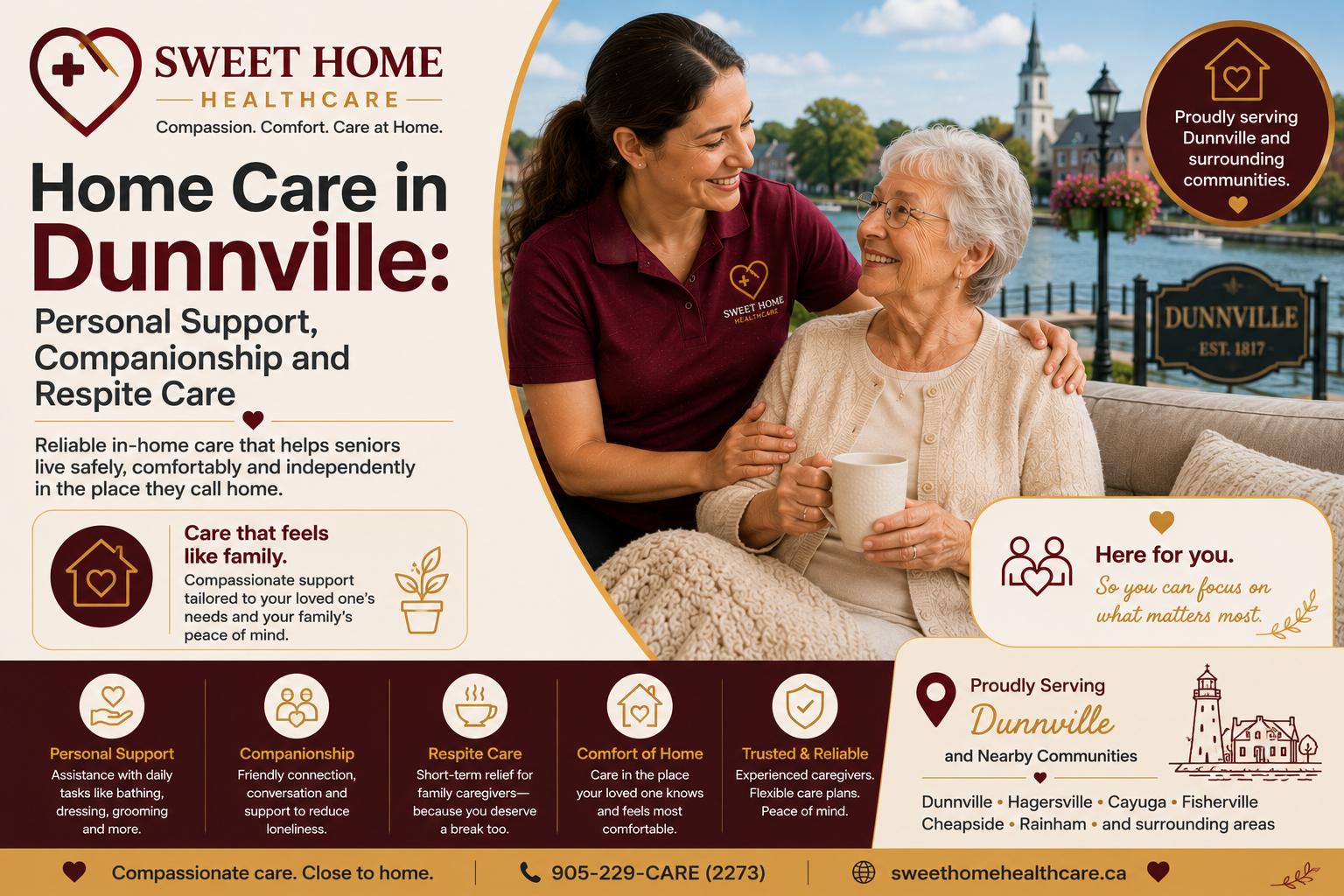
Home care in Dunnville helps seniors and adults remain comfortable in familiar surroundings while receiving practical, non-medical support with everyday routines. Services may include personal support, companionship, medication reminders, meal preparation, light housekeeping, respite care and overnight assistance. For families in Dunnville and nearby Haldimand County communities, flexible home care can reduce pressure, support independence and provide reassurance when a loved one needs help but wants to continue living at home.
What Is Home Care in Dunnville?
Home care is support provided in a person’s own residence to help with daily living, comfort and routine. It may be arranged for seniors, adults recovering after illness, people living alone and families who need temporary or ongoing assistance.
Non-medical home care does not replace doctors, nurses or other healthcare professionals. Instead, it focuses on practical support such as personal care, meals, companionship, housekeeping and reminders.
Care may be scheduled for a few hours each week, regular daily visits, evenings, overnight periods or longer shifts. The right arrangement depends on the person’s needs, preferences and family situation.
Why Dunnville Families Consider Home Care
Families often begin looking for home care when they notice that an aging parent or loved one is finding certain tasks more difficult. These changes may happen gradually and do not always mean the person must move into a retirement or residential care setting.
Home care may help when a loved one:
- Finds bathing, dressing or grooming difficult
- Needs help preparing meals
- Forgets medication times or appointments
- Has trouble keeping the home tidy
- Spends long periods alone
- Needs support after illness or hospital discharge
- Feels uncertain during evenings or nights
- Relies heavily on one family caregiver
- Wants to remain at home but needs practical assistance
Starting with a small amount of support can make the transition easier and allow the care plan to change as needs increase or decrease.
Personal Support Care in Dunnville
Personal support care helps with routine activities that may have become tiring, uncomfortable or difficult. Assistance should be provided respectfully and with attention to privacy, dignity and personal choice.
Personal support may include:
- Help with bathing or shower routines
- Assistance with dressing
- Grooming and personal hygiene support
- Help moving around the home
- Morning and bedtime routines
- Meal and hydration support
- General daily living assistance
A good caregiver should not automatically take over every task. The client should be encouraged to continue doing what they can safely manage.
Companionship Care in Dunnville
Companionship care provides social connection, friendly conversation and regular check-ins. It may be especially helpful for seniors who live alone, have limited social contact or spend long periods without visitors.
Companionship visits may include:
- Conversation and emotional reassurance
- Reading, puzzles or card games
- Meal companionship
- Light activities
- Appointment and routine reminders
- Support with phone or video calls to family
- Short walks where appropriate
- Help maintaining a more structured day
Companionship care is not only about being present. It should help the senior feel respected, engaged and connected.
Respite Care for Dunnville Family Caregivers
Family caregiving can be rewarding, but it can also require significant time and energy. One person may be managing meals, appointments, reminders, household tasks and personal support while also balancing work and other family responsibilities.
Respite care provides temporary support so the family caregiver can rest, attend appointments, work, travel or manage other commitments.
Respite care may be arranged for:
- A few hours during the day
- A regular weekly break
- An evening
- Overnight support
- A family event or appointment
- Temporary coverage during illness or travel
Requesting respite care does not mean the family caregiver is failing. It is a practical way to share responsibilities and make the overall care arrangement easier to maintain.
Other Home Care Services Available
Personal support, companionship and respite care can be combined with other services based on the client’s needs.
Medication Reminders
A non-medical caregiver may remind a client to follow an existing medication schedule. They do not prescribe medication, change instructions or provide medical advice.
Meal Preparation
A caregiver may prepare simple meals, warm family-prepared food, encourage hydration and clean up afterward. Medical diets should be guided by an appropriate healthcare professional.
Light Housekeeping
Light housekeeping may include dishes, laundry, changing linens, tidying common areas, taking out household garbage and keeping frequently used spaces organized.
Overnight and Extended Care
Evening, overnight and longer shifts may include companionship, meal support, reminders, personal routines and general reassurance based on the agreed care plan.
Custom Care Planning
A personalized care plan can combine several services and define when care should be provided, what tasks are included and how family members receive updates.
Who Can Benefit From Home Care in Dunnville?
Home care is not only for people with extensive care needs. It can also support someone who is mostly independent but needs help with certain parts of daily life.
Home care may benefit:
- Seniors who want to remain in their own homes
- Adults recovering after illness
- People who live alone
- Individuals who need help with daily routines
- Families who live outside Dunnville
- Family caregivers who need temporary relief
- Clients who need evening or overnight reassurance
- People whose support needs change over time
Signs That It May Be Time to Request Home Care
Seniors do not always ask for help directly. Families may notice changes in appearance, routine, household organization or social activity before a loved one explains that certain tasks have become difficult.
Possible signs include:
- Reduced personal hygiene
- Wearing the same clothing repeatedly
- Skipped meals or expired food
- Dishes, laundry or clutter building up
- Missed appointments
- Difficulty moving around the home
- Frequently forgetting daily routines
- Reduced social interaction
- Greater anxiety about being alone
- Family caregivers becoming tired or overwhelmed
One change may not mean regular care is required, but a repeated pattern may show that support would improve daily life.
Home Care Needs Checklist for Dunnville Families
| Area to Review | What Families May Notice | Possible Home Care Support |
|---|---|---|
| Personal care | Bathing, dressing or grooming is becoming difficult. | Respectful personal support based on the client’s comfort level. |
| Meals | Cooking feels tiring or meals are being skipped. | Simple meal preparation, hydration reminders and cleanup. |
| Medication routine | The client forgets existing medication times. | Non-medical reminders based on current instructions. |
| Housekeeping | Dishes, laundry and clutter are building up. | Light housekeeping and household organization. |
| Companionship | The person spends long periods without regular company. | Conversation, check-ins and light activities. |
| Family caregiver pressure | One relative is handling most care responsibilities. | Respite care or scheduled support visits. |
| Evening needs | Dinner, reminders or bedtime routines are difficult. | Evening support from late afternoon through bedtime. |
| Overnight needs | The client feels uneasy or needs agreed assistance at night. | Overnight or extended home care. |
How Home Care Supports Independence
Accepting home care does not mean giving up independence. Good care should help the client continue making choices and participating in daily routines.
For example, a senior may choose their clothing while receiving help with difficult fasteners. They may decide what meal they want while the caregiver handles preparation and cleanup. They may complete simple household tasks while receiving support with laundry or more tiring activities.
The caregiver’s role is to assist where help is needed, not automatically take control of the client’s routine.
Why Personalized Care Planning Matters
Every person has different abilities, preferences and family circumstances. A standard package may provide too much help in one area while overlooking another important need.
A custom care plan may include:
- The services required
- Preferred visit days and times
- The expected length of each visit
- Morning, afternoon, evening or overnight routines
- Meal and household preferences
- Medication reminder instructions
- Tasks the client wants to continue independently
- Family communication arrangements
- A process for reviewing and changing care
Personalized planning helps caregivers provide more consistent support and gives families a clearer understanding of what happens during each visit.
Possible Home Care Schedules in Dunnville
| Care Need | Possible Schedule | Examples of Support |
|---|---|---|
| Light weekly help | One or two visits per week | Companionship, meals, laundry and light housekeeping. |
| Morning assistance | Regular morning visits | Bathing, dressing, grooming, breakfast and reminders. |
| Family caregiver relief | A few scheduled hours | Respite care, companionship and routine support. |
| Recovery support | Temporary daily visits | Meals, personal support, reminders and housekeeping. |
| Evening care | Late afternoon through bedtime | Dinner, companionship, reminders and bedtime preparation. |
| Overnight care | Selected or regular nights | Reassurance, agreed nighttime assistance and morning support. |
| Extended care | Longer daytime or evening shifts | Several daily routines supported during one continuous visit. |
Home Care for Seniors Living Alone in Dunnville
Seniors who live alone may remain capable of managing many activities but still benefit from regular check-ins and practical assistance.
A caregiver may help with meals, reminders, household tasks and companionship. These visits can also reassure family members who live outside Dunnville or cannot visit as often as they would like.
For seniors who spend long periods alone, companionship can add structure to the week. A regular caregiver visit provides a familiar person to talk with and can encourage participation in meals, hobbies and daily routines.
Support for Families Who Live Outside Dunnville
Adult children and relatives may live elsewhere in Ontario or farther away. They may worry about whether their loved one is eating regularly, managing personal routines or keeping appointments.
Home care can provide local support while keeping designated family members informed. Before care begins, families should decide:
- Who should receive routine updates
- Who should be contacted if a concern arises
- How schedule changes will be communicated
- Which decisions the client makes independently
- When the care plan should be reviewed
A clear communication process can reduce uncertainty for relatives who cannot be present every day.
Recovery Support After Illness
Returning home after illness or a hospital stay can be tiring. Someone who was previously independent may temporarily need assistance with meals, personal routines and household organization.
Recovery support may include:
- Meal preparation
- Medication reminders
- Personal support
- Light housekeeping
- Companionship
- Evening or overnight reassurance
Non-medical caregivers support everyday routines while the client follows instructions from healthcare professionals. They do not provide medical treatment or replace nursing care.
How Respite Care Supports the Whole Family
Respite care is not only helpful for the primary caregiver. It can improve the overall family care arrangement by creating more predictable support and reducing last-minute pressure.
For example, one family member may provide most weekday care while another helps on weekends. Adding a regular respite visit can give everyone a dependable break and reduce the amount of emergency scheduling.
Respite support can also allow family members to spend more time enjoying their relationship with their loved one rather than focusing only on practical tasks.
What Non-Medical Home Care Does Not Include
Families should understand the difference between non-medical support and clinical healthcare services.
Non-medical caregivers generally do not:
- Diagnose health conditions
- Prescribe or change medication
- Provide medical advice
- Perform wound care
- Provide injections
- Make clinical assessments
- Create medical treatment plans
- Replace doctors, nurses or therapists
If your loved one needs clinical monitoring, medication administration or specialized healthcare services, contact the appropriate healthcare professional.
Questions to Ask a Dunnville Home Care Provider
Before arranging care, families should ask practical questions about services, scheduling, caregivers and communication.
- Which home care services do you provide in Dunnville?
- How do you assess my loved one’s needs?
- How are caregivers screened and prepared?
- How do you match caregivers with clients?
- Can the same caregiver provide most visits?
- What happens when the regular caregiver is unavailable?
- Can care be arranged during evenings or overnight?
- What are the minimum visit requirements?
- How are family members kept informed?
- Can services increase or decrease later?
- What affects the cost of care?
- Which tasks are not included?
A dependable provider should explain these details clearly before services begin.
How to Introduce Home Care to Your Loved One
Some seniors may feel hesitant about receiving help. They may worry that a caregiver will take over their routine or that accepting care means they can no longer live independently.
Families can make the discussion easier by focusing on the tasks that feel tiring rather than describing the person as unable to cope.
Helpful steps include:
- Involving the senior in choosing services
- Allowing them to select preferred visit times
- Starting with one or two weekly visits
- Explaining that the caregiver will support, not replace, their routine
- Introducing the caregiver gradually
- Reviewing the arrangement after the first few visits
A respectful approach can help the senior feel more comfortable and involved.
Choosing Home Care in Dunnville
When choosing home care in Dunnville, families should look for personalized care planning, dependable scheduling, respectful caregivers and clear communication.
The provider should understand the client’s preferred routine and explain how support can change if needs increase or decrease. Families should also receive clear information about costs, service boundaries and caregiver availability.
SweetHome Health Care supports families in Dunnville and nearby communities, including Caledonia, Simcoe, Port Dover, Jarvis, Cayuga and Haldimand County. Services may include personal support, companionship, meal preparation, medication reminders, light housekeeping, respite care, overnight assistance and custom care plans.
Frequently Asked Questions About Home Care in Dunnville
What is home care in Dunnville?
Home care in Dunnville is non-medical support provided in a person’s residence. It may include personal care, companionship, meals, medication reminders, housekeeping, respite care and overnight assistance.
Can home care be arranged part-time?
Yes. Families may arrange one or two weekly visits, regular daily assistance, evenings, overnight periods or longer shifts depending on the client’s needs and provider availability.
What does personal support care include?
Personal support may include assistance with bathing, dressing, grooming, mobility and other daily routines while protecting the client’s dignity and independence.
How does companionship care help seniors?
Companionship care provides conversation, regular check-ins, light activities and reassurance. It may be especially helpful for seniors who live alone or have limited social interaction.
Can respite care be scheduled regularly?
Yes. Families may arrange respite care occasionally or on a recurring schedule to give the primary caregiver dependable time to rest or manage other responsibilities.
Does home care include medical treatment?
No. Non-medical home care supports everyday routines and does not replace doctors, nurses or other qualified healthcare professionals.
Does SweetHome Health Care serve communities near Dunnville?
SweetHome Health Care supports families in Dunnville and nearby communities, including Caledonia, Simcoe, Port Dover, Jarvis, Cayuga and Haldimand County.
Request Home Care Support in Dunnville
If your loved one needs help with personal routines, companionship, meals, household tasks or family caregiver relief, SweetHome Health Care can help create a flexible care plan based on their needs and preferred schedule.
Request care, call SweetHome Health Care or book a consultation to discuss home care in Dunnville and nearby communities.
